

Reading mail
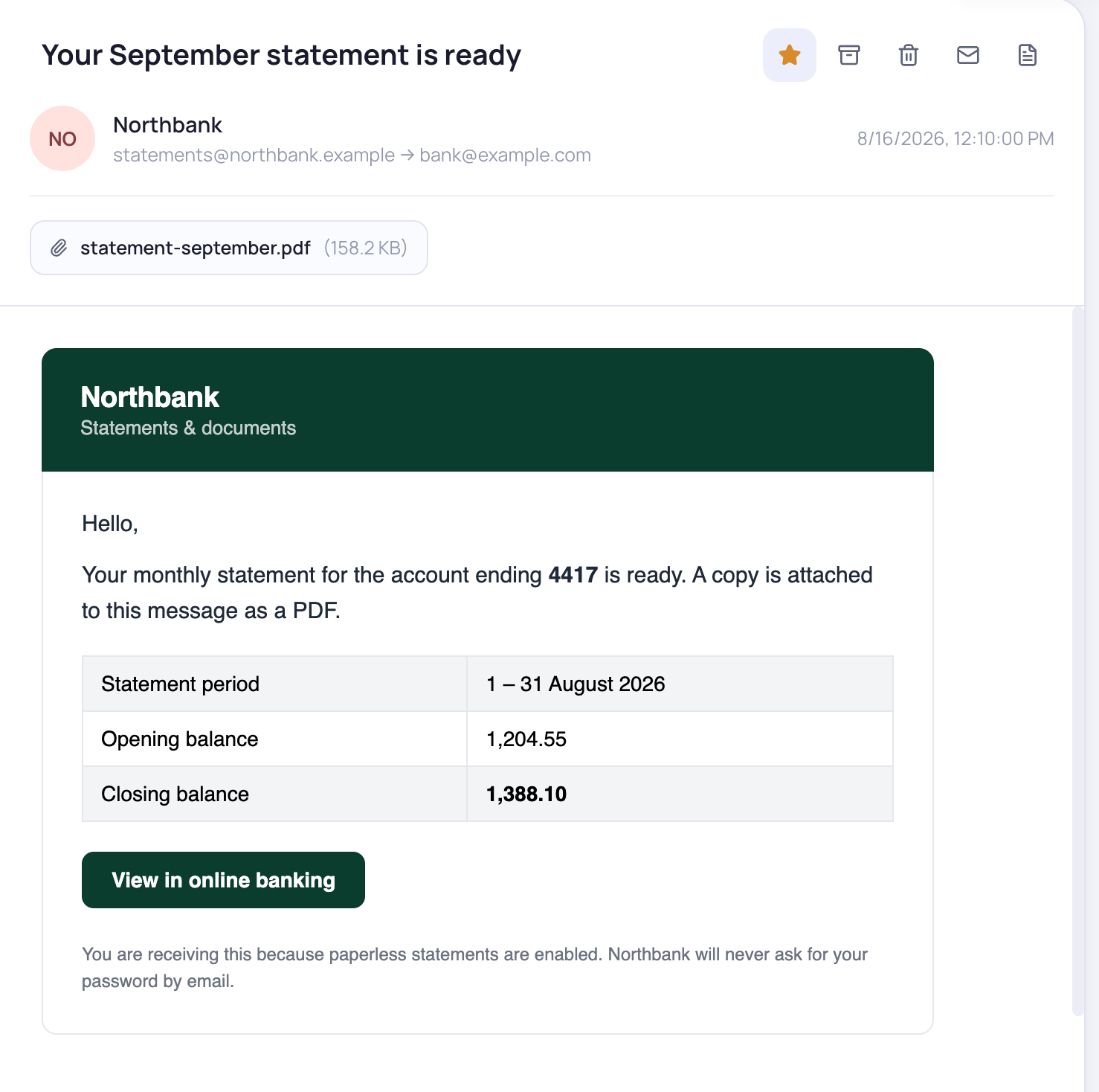
Messages are shown as their sender wrote them: their CSS, their tables, their layout. Nothing is stripped for presentation.
Remote images are withheld
Section titled “Remote images are withheld”A tracking pixel tells the sender that you opened the message, when, and from roughly where. So images hosted elsewhere are not loaded. When a message references any, a line appears above it:
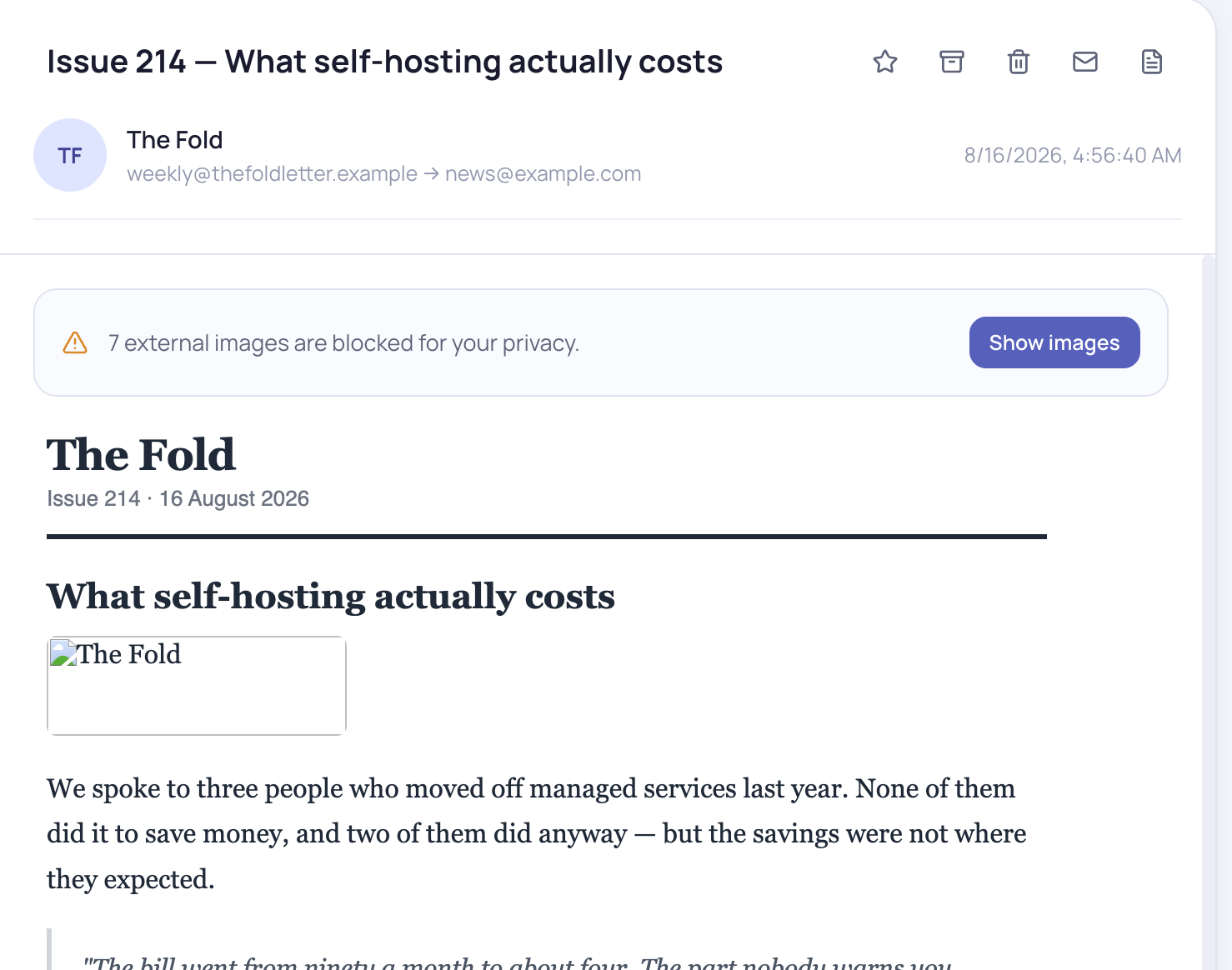
Pressing it reloads that message with them allowed. The choice applies to the message you are reading, not permanently to the sender.
Nothing reaches a third-party server before you press it.
Embedded images just work
Section titled “Embedded images just work”Pictures attached to the message itself — logos, signatures — are part of the message rather than a call to someone else’s server, so they render straight away with no prompt. They cost no privacy.
They also stay in the attachment list, so you can download the original file.
SVG is the exception: it can carry script, so it is always a download and never rendered inline.
There are size caps too — roughly 1 MB per image and 5 MB across a message. Past those, the picture stays a download rather than being embedded, which keeps one enormous message from being expensive to open.
Attachments
Section titled “Attachments”Listed under the message header with filename and size. Selecting one downloads it — attachments are never opened in place.
The original .eml is downloadable too, from the document icon in the message
toolbar. That is the message exactly as it arrived, headers included, which is
what you want for forwarding a report or checking a signature.
How this is kept safe
Section titled “How this is kept safe”The body is served in a sandboxed frame under a strict Content-Security-Policy that denies scripts entirely — so rendering a message as-sent does not mean running whatever it contains. Security has the detail.
The message keeps its own background
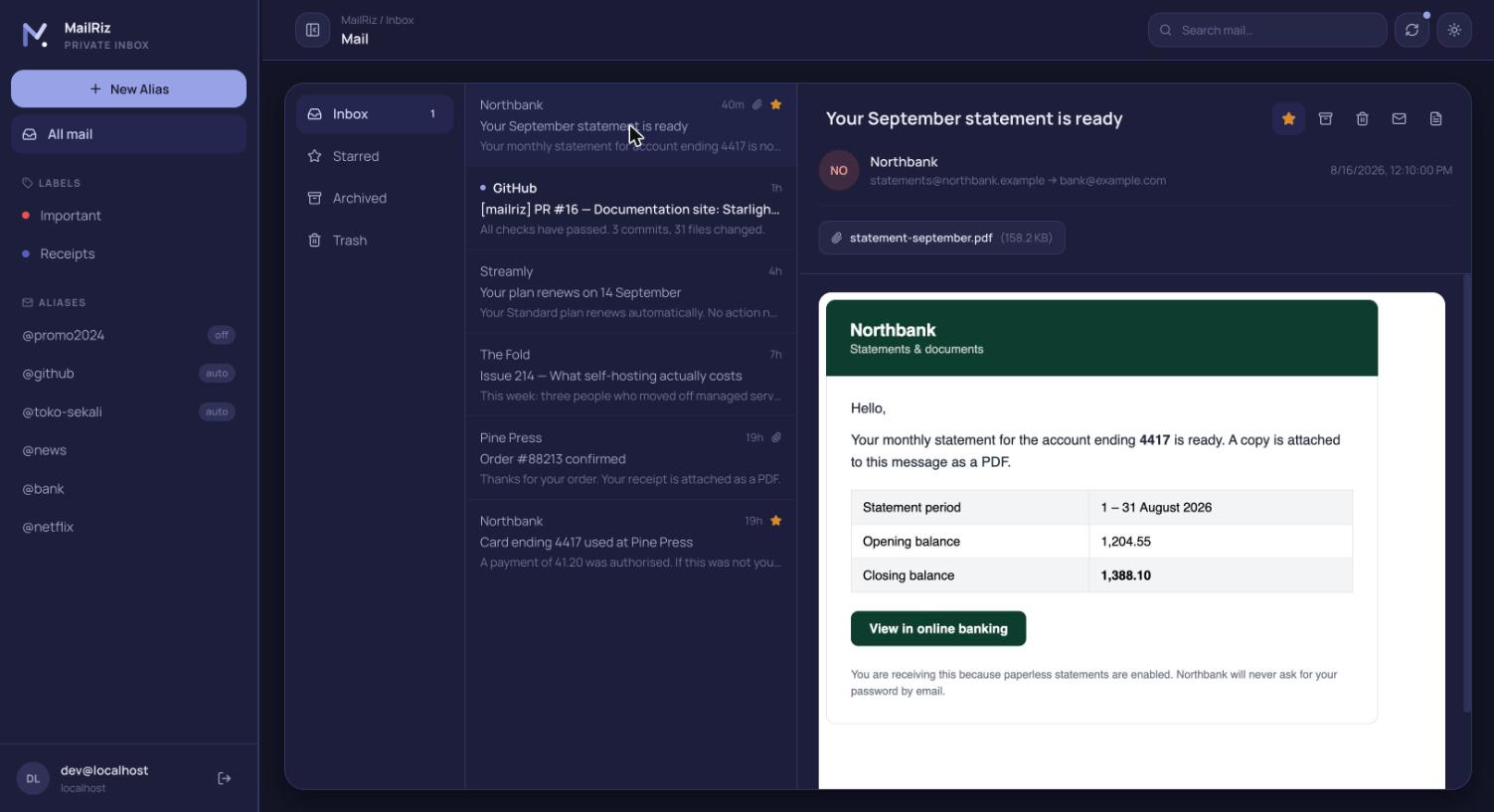
Section titled “The message keeps its own background”In dark mode the dashboard goes dark, but the message body does not. The HTML inside belongs to the sender and was written against a light background — tinting it would break contrast in ways they never tested.
Plain-text messages
Section titled “Plain-text messages”Messages with no HTML part render as text. Where a message has both, the HTML is shown — they are two renderings of the same thing, and displaying both would print it twice.